


Choosing window curtains is more than a design decision. In a climate with intense sunlight and modern architectural spaces, curtains function as privacy systems, light regulators, thermal barriers, and aesthetic anchors. Whether you’re furnishing a new apartment, upgrading a villa, or fitting out a commercial workspace, selecting the right window treatment requires a structured approach.
This guide explains how to evaluate curtain types, fabrics, measurements, installation methods, and local purchasing considerations so you can make a confident, long-lasting decision.
Why Curtain Selection Matters
Curtains influence comfort, energy efficiency, productivity, and interior perception. The wrong choice can lead to excessive glare, heat buildup, fading furniture, or constant maintenance. The right system balances performance and style while adapting to the environment.
In high-sun regions like Dubai, curtain performance directly affects indoor temperature and visual comfort. This makes fabric choice, lining quality, and mounting method especially important.
Step-by-Step Framework for Choosing Curtains
1. Define the Primary Function
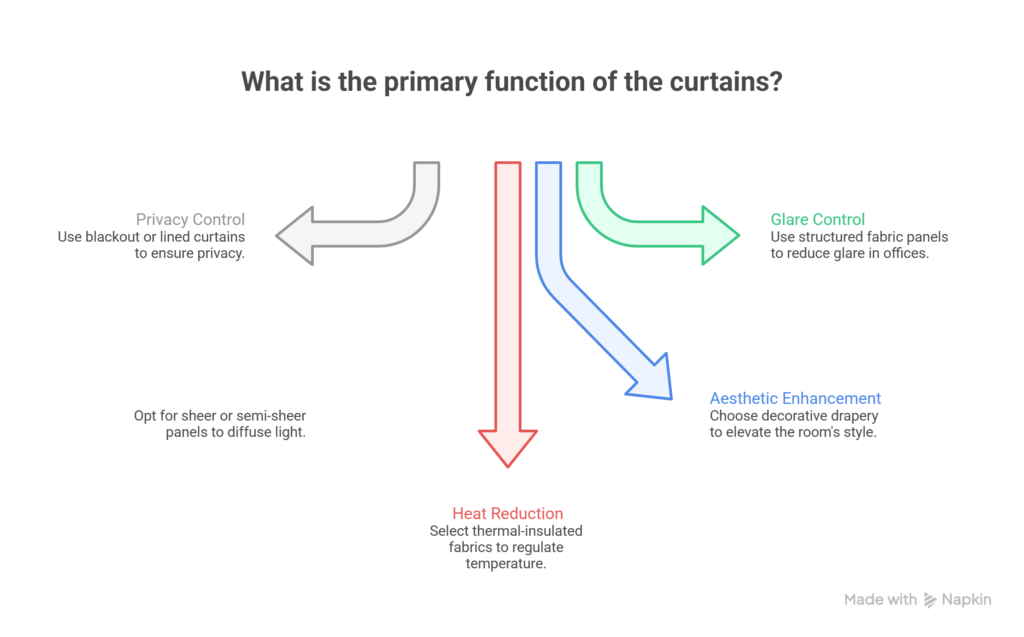
Start by identifying what you want the curtains to do:
- Privacy control → blackout or lined curtains
- Light filtering → sheer or semi-sheer panels
- Heat reduction → thermal-insulated fabrics
- Aesthetic enhancement → decorative drapery
- Glare control (offices) → structured fabric panels
When multiple functions are needed, layered curtain systems provide flexibility.
2. Select Fabric Based on Performance
Fabric weight determines how curtains behave.
| Fabric Weight | Performance | Ideal Use |
|---|---|---|
| Light | Decorative, airy | Living rooms |
| Medium | Balanced function | Multi-purpose spaces |
| Heavy | Insulation, privacy | Bedrooms, offices |
UV-resistant and fade-resistant materials are strongly recommended for sun-exposed windows.
3. Choose Mounting Style and Length
Mounting height affects both function and visual proportion.
- Ceiling-mounted rods create a taller room appearance
- Floor-length curtains create a formal aesthetic
- Sill-length panels suit practical office environments
4. Decide Between Ready-Made and Custom Curtains
Ready-made options are fast and economical. Custom curtains provide precise fit, tailored fabric selection, and design integration for non-standard windows.
Understanding Curtain Types
Sheer Curtains
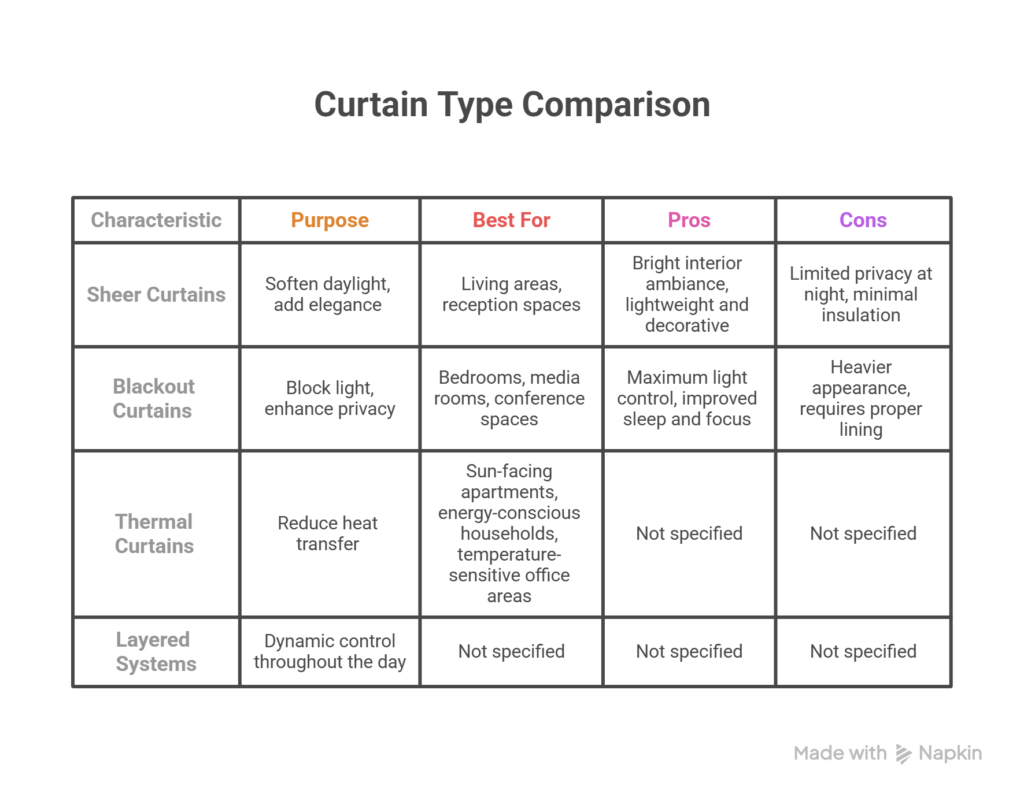
Sheer curtains soften daylight and add elegance. They work best in living areas or reception spaces where natural light is desirable.
Pros
- Bright interior ambiance
- Lightweight and decorative
Cons
- Limited privacy at night
- Minimal insulation
Blackout Curtains
Designed to block light and enhance privacy, blackout curtains are ideal for bedrooms, media rooms, and conference spaces.
Pros
- Maximum light control
- Improved sleep and focus
Cons
- Heavier appearance
- Requires proper lining
Thermal Curtains
Thermal curtains include insulating layers that reduce heat transfer through windows.
Best For
- Sun-facing apartments
- Energy-conscious households
- Temperature-sensitive office areas
Layered Curtain Systems
Combining sheer and blackout panels allows dynamic control throughout the day.
Choosing the Right Fabric for Climate Conditions
Heat, sunlight intensity, and humidity influence fabric performance.
| Fabric | Characteristics | Recommended Application |
|---|---|---|
| Polyester blend | Durable, UV resistant | Offices, high-traffic rooms |
| Linen | Natural texture, breathable | Living areas |
| Velvet | Dense insulation | Bedrooms |
| Cotton | Versatile, easy care | General residential use |
Light-reflective colors reduce heat absorption. Dense fabrics improve insulation but may require stronger mounting hardware.
Accurate Curtain Measurement Guide
Incorrect measurement is the most common reason curtains fail to perform correctly.
Tools Needed
Tape measure, level, mounting brackets.
Measurement Procedure
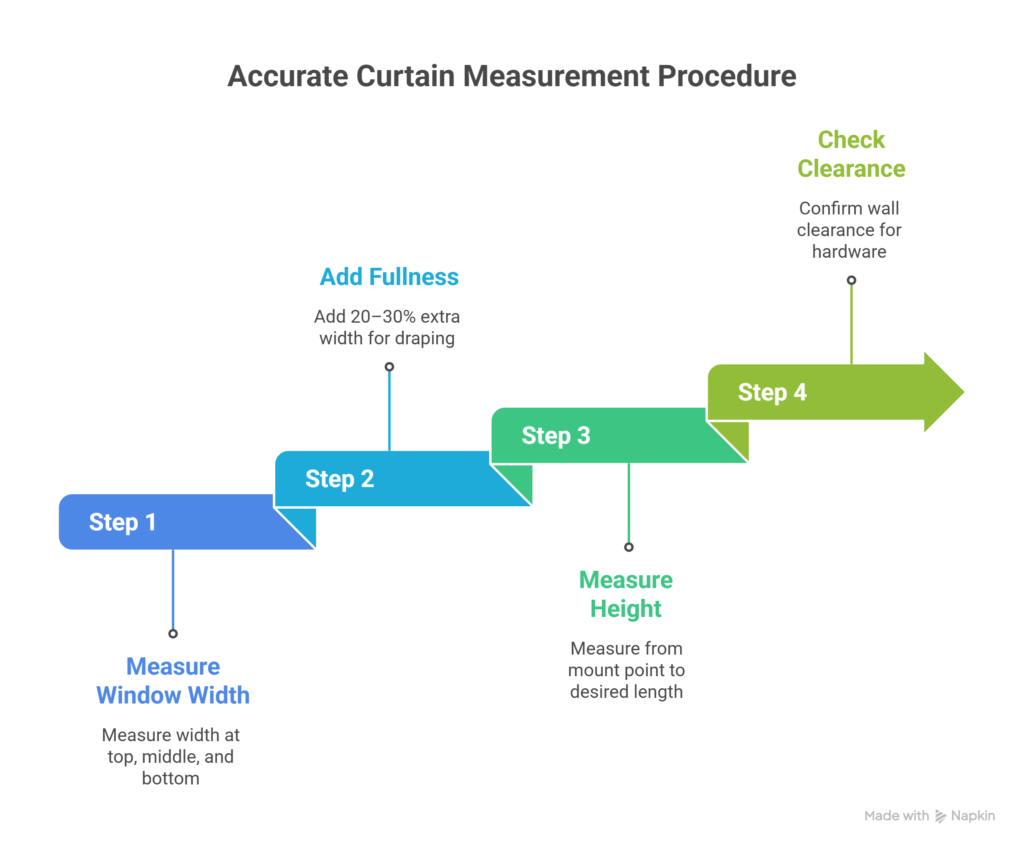
- Measure window width at top, middle, and bottom.
- Add 20–30% extra width for fullness.
- Measure height from mount point to desired length.
- Confirm wall clearance for hardware projection.
Professional Standard: Curtain width should be 1.5 to 2.5 times the window width for proper draping.
Residential vs Commercial Curtain Strategies
Home Environments
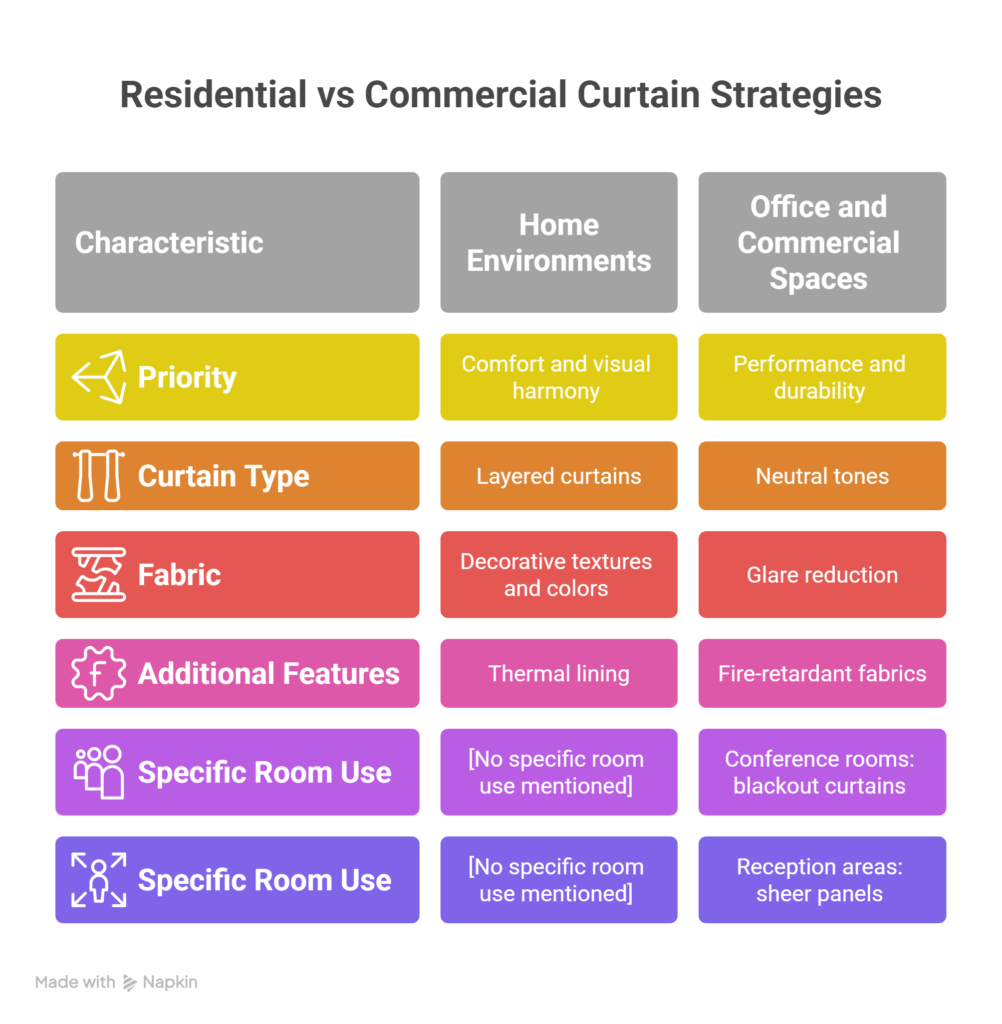
Residential spaces prioritize comfort and visual harmony.
- Layered curtains for flexible lighting
- Decorative textures and colors
- Thermal lining for energy efficiency
Office and Commercial Spaces
Work environments emphasize performance and durability.
- Neutral tones support branding consistency
- Glare reduction improves productivity
- Fire-retardant fabrics often required
Conference rooms typically benefit from blackout curtains, while reception areas may use sheer panels for openness.
Color and Design Coordination
Curtain color influences spatial perception and mood.
- Light shades create openness and reflect heat
- Dark tones increase privacy and formality
- Vertical patterns visually raise ceiling height
- Minimalist designs suit professional interiors
Curtains should complement wall color, flooring, and furniture materials rather than compete with them.
Hardware, Installation, and Smart Integration
Curtain performance depends on correct installation.
Common Hardware Systems
- Rod pocket
- Grommet
- Track-mounted panels
Motorized Curtains
Motorized systems provide remote operation and integration with smart building controls. Leading manufacturers such as Hunter Douglas offer advanced automation options.
Ready-made curtains and accessories are widely available through global retailers including IKEA.
Curtain Pricing Considerations in Dubai
Costs vary based on fabric quality, window size, and installation complexity.
| Category | Market Position |
|---|---|
| Ready-made curtains | Budget-friendly |
| Custom-made curtains | Mid to premium |
| Motorized systems | Premium tier |
Service demand in districts like Dubai Marina and Business Bay often leads to higher installation pricing due to premium property standards.
Common Mistakes to Avoid
- Choosing style before function
- Ignoring sun exposure impact
- Selecting incorrect length
- Using low-quality lining
- Installing rods too close to window frame
Avoiding these errors ensures longevity and optimal performance.
Alternatives to Curtains
While curtains are versatile, other window treatments may suit specific needs.
| Alternative | Best Use Case |
|---|---|
| Roller blinds | Minimalist interiors |
| Roman shades | Compact rooms |
| Vertical blinds | Large glass surfaces |
| Smart glass | Premium commercial spaces |
Maintenance and Longevity Tips
Proper care extends curtain lifespan.
- Vacuum regularly to remove dust
- Follow fabric-specific cleaning guidelines
- Use UV-resistant lining for sun-facing windows
- Rotate panels periodically to prevent fading
Durable materials such as polyester blends require less maintenance than delicate fabrics.
Professional Installation and Local Expertise
Accurate measurement, climate-appropriate fabric selection, and proper mounting significantly affect curtain performance. Professional consultation ensures tailored solutions for both residential and commercial spaces.
For customized designs, precision installation, and climate-optimized materials, many homeowners and businesses rely on Umair Blinds and Curtains. Their services include measurement, design Free consultation, motorized systems, and full installation support across major residential and commercial districts.
Frequently Asked Questions
1. Which curtains are best for blocking heat?
Thermal or blackout curtains with reflective lining reduce solar heat gain effectively.
2. Should curtains touch the floor?
Floor-length curtains create a formal appearance, while sill-length panels suit practical office environments.
3. Are custom curtains worth the investment?
Custom curtains provide precise fit, better performance, and design consistency for non-standard windows.
4. What fabric lasts the longest in sunny environments?
Polyester blends offer strong UV resistance and durability.
5. Can curtains improve energy efficiency?
Yes. Insulating fabrics reduce heat transfer through windows, lowering cooling demand.
6. What curtain style works best for offices?
Neutral, structured, glare-reducing curtains provide functional and professional results.
7. How often should curtains be cleaned?
Regular dust removal is recommended, with deeper cleaning based on fabric type and exposure.
8. Are motorized curtains practical for homes?
They provide convenience, consistent operation, and integration with smart home systems.
Conclusion
Choosing the right window curtains requires balancing function, climate performance, aesthetics, and installation quality. By identifying your primary goal, selecting suitable fabrics, measuring accurately, and considering professional installation, you ensure long-term comfort and visual harmony.
For homeowners and businesses seeking tailored solutions, expert consultation simplifies the process and guarantees precision. The right curtain system is not just a decoration—it is a performance feature that enhances everyday living and working environments.